Introduction
Breast cancer is a disease in which abnormal cells in the breast grow uncontrollably and can form a tumour. It is the most commonly diagnosed cancer among women worldwide. Although breast cancer cannot always be prevented, understanding the factors that increase risk and making healthy lifestyle choices can help reduce the risk.
Common Causes and Risk Factors
There is no single cause of breast cancer. A person’s risk is influenced by a combination of genetic, hormonal, lifestyle and environmental factors.
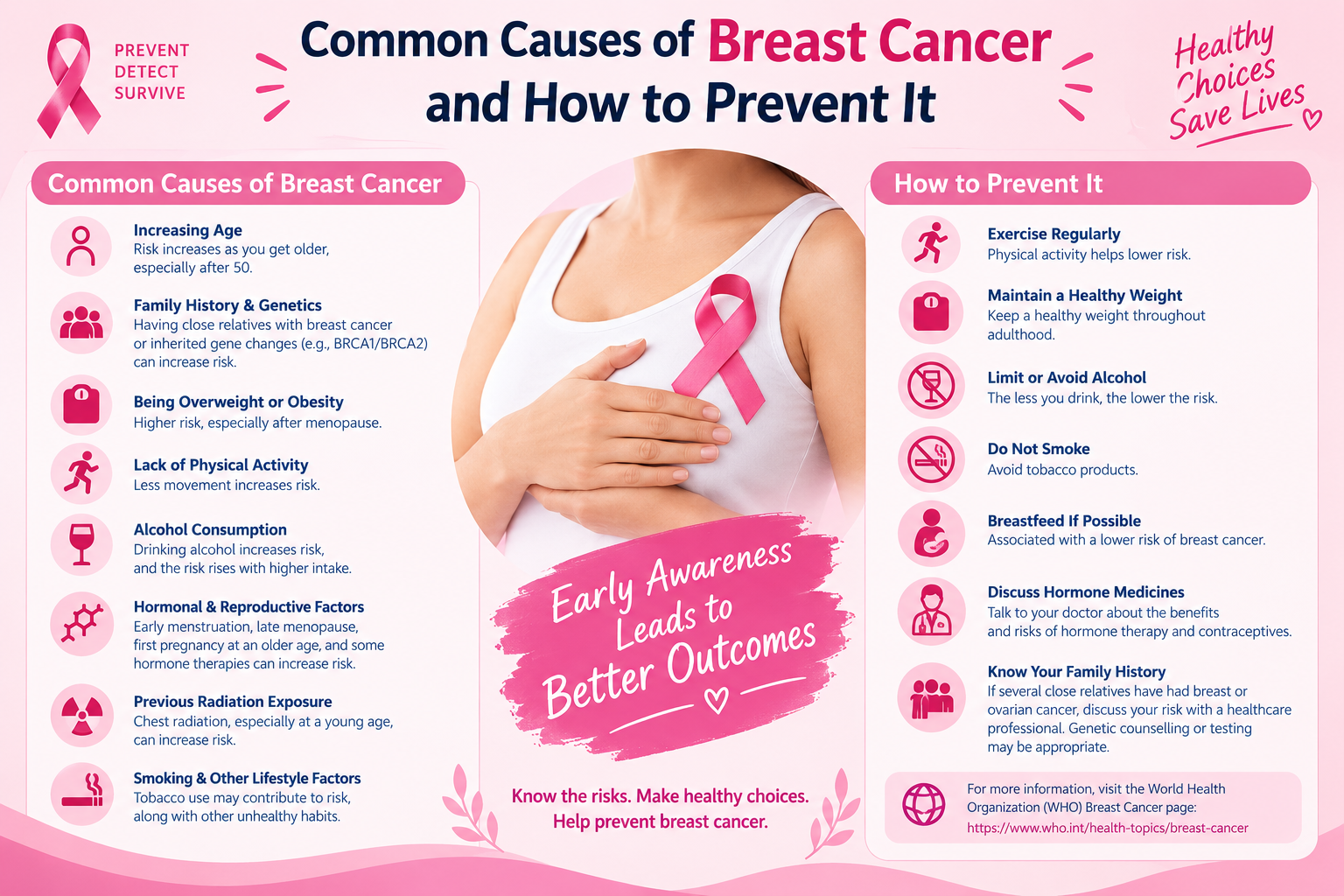
1. Increasing Age
The risk of breast cancer increases as people get older. Age is one of the strongest risk factors for the disease.
2. Family History and Genetics
Having close relatives with breast cancer can increase a person’s risk. Inherited changes in genes such as BRCA1 and BRCA2 can also greatly increase the risk of breast and ovarian cancers. However, most people diagnosed with breast cancer do not have a known family history of the disease.
3. Being Overweight or Having Obesity
Being overweight, particularly after menopause, is associated with a higher risk of breast cancer. Maintaining a healthy weight can therefore help reduce risk.
4. Lack of Physical Activity
People who are not physically active have a higher risk of breast cancer. Regular physical activity is one of the lifestyle measures that can help lower risk.
5. Alcohol Consumption
Drinking alcohol increases the risk of breast cancer, and the risk generally increases as alcohol consumption increases. Limiting alcohol or avoiding it can reduce this risk.
6. Hormonal and Reproductive Factors
Some factors related to exposure to hormones can affect breast cancer risk. These include starting menstruation at a young age, reaching menopause later, having a first full-term pregnancy at an older age, and certain types of menopausal hormone therapy.
7. Previous Radiation Exposure
Radiation treatment involving the chest, particularly at a young age, can increase the risk of developing breast cancer later in life.
8. Smoking and Other Lifestyle Factors
Tobacco use may contribute to breast cancer risk, alongside other harmful health effects. Maintaining a healthy lifestyle is therefore important for reducing overall cancer risk.
How Can Breast Cancer Risk Be Reduced?
Although some risk factors, such as age and inherited genes, cannot be changed, several healthy choices can help reduce the risk.
- Exercise regularly: Regular physical activity can help lower breast cancer risk.
- Maintain a healthy weight: Aim for a healthy weight throughout adulthood.
- Limit or avoid alcohol: Reducing alcohol consumption can lower breast cancer risk.
- Do not smoke: Avoid tobacco products.
- Breastfeed if possible: Breastfeeding is associated with a lower risk of breast cancer.
- Discuss hormone medicines with a healthcare professional: Ask about the benefits and risks of hormone replacement therapy and hormonal contraceptives.
- Know your family history: If several close relatives have had breast or ovarian cancer, discuss your risk with a healthcare professional. Genetic counselling or testing may sometimes be appropriate.
Early Detection Is Important
Prevention does not mean that breast cancer can always be avoided. Most breast cancers occur in people without a specific modifiable risk factor other than age and sex. Therefore, knowing the signs and following appropriate screening recommendations are also important.
Possible warning signs include a new lump or thickening in the breast, changes in breast size or shape, skin dimpling or redness, changes to the nipple, or unusual nipple discharge. Anyone who notices a concerning change should seek medical advice.
Screening can help detect breast cancer at an earlier stage, when treatment is generally more effective. Screening recommendations depend on age, personal risk and the healthcare system in which a person lives.
Conclusion
Breast cancer has many possible risk factors, and not all cases can be prevented. However, maintaining a healthy weight, being physically active, limiting alcohol, avoiding tobacco, breastfeeding when possible, understanding family history and following appropriate screening advice can help reduce risk or improve the chances of detecting the disease early.


Introduction
Breast cancer is a disease in which abnormal cells in the breast grow uncontrollably and can form a tumour. It is the most commonly diagnosed cancer among women worldwide. Although breast cancer cannot always be prevented, understanding the factors that increase risk and making healthy lifestyle choices can help reduce the risk.
Common Causes and Risk Factors
There is no single cause of breast cancer. A person’s risk is influenced by a combination of genetic, hormonal, lifestyle and environmental factors.
1. Increasing Age
The risk of breast cancer increases as people get older. Age is one of the strongest risk factors for the disease.
2. Family History and Genetics
Having close relatives with breast cancer can increase a person’s risk. Inherited changes in genes such as BRCA1 and BRCA2 can also greatly increase the risk of breast and ovarian cancers. However, most people diagnosed with breast cancer do not have a known family history of the disease.
3. Being Overweight or Having Obesity
Being overweight, particularly after menopause, is associated with a higher risk of breast cancer. Maintaining a healthy weight can therefore help reduce risk.
4. Lack of Physical Activity
People who are not physically active have a higher risk of breast cancer. Regular physical activity is one of the lifestyle measures that can help lower risk.
5. Alcohol Consumption
Drinking alcohol increases the risk of breast cancer, and the risk generally increases as alcohol consumption increases. Limiting alcohol or avoiding it can reduce this risk.
6. Hormonal and Reproductive Factors
Some factors related to exposure to hormones can affect breast cancer risk. These include starting menstruation at a young age, reaching menopause later, having a first full-term pregnancy at an older age, and certain types of menopausal hormone therapy.
7. Previous Radiation Exposure
Radiation treatment involving the chest, particularly at a young age, can increase the risk of developing breast cancer later in life.
8. Smoking and Other Lifestyle Factors
Tobacco use may contribute to breast cancer risk, alongside other harmful health effects. Maintaining a healthy lifestyle is therefore important for reducing overall cancer risk.
How Can Breast Cancer Risk Be Reduced?
Although some risk factors, such as age and inherited genes, cannot be changed, several healthy choices can help reduce the risk.
Early Detection Is Important
Prevention does not mean that breast cancer can always be avoided. Most breast cancers occur in people without a specific modifiable risk factor other than age and sex. Therefore, knowing the signs and following appropriate screening recommendations are also important.
Possible warning signs include a new lump or thickening in the breast, changes in breast size or shape, skin dimpling or redness, changes to the nipple, or unusual nipple discharge. Anyone who notices a concerning change should seek medical advice.
Screening can help detect breast cancer at an earlier stage, when treatment is generally more effective. Screening recommendations depend on age, personal risk and the healthcare system in which a person lives.
Conclusion
Breast cancer has many possible risk factors, and not all cases can be prevented. However, maintaining a healthy weight, being physically active, limiting alcohol, avoiding tobacco, breastfeeding when possible, understanding family history and following appropriate screening advice can help reduce risk or improve the chances of detecting the disease early.